In This Article
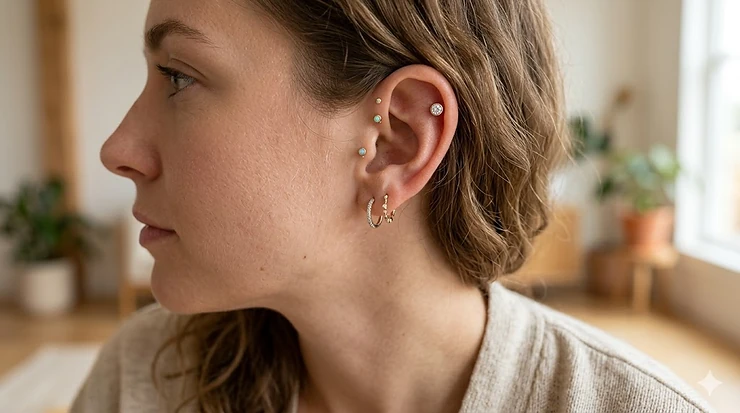
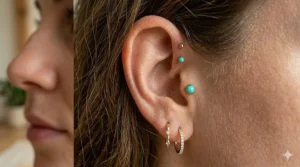
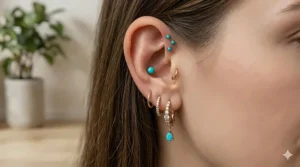
Cartilage piercings have exploded in popularity over the past few years, and forward helix earrings are leading the charge as one of the most sought-after ear piercing styles. Unlike traditional helix piercings that sit on the outer upper rim of your ear, forward helix earrings occupy that small, delicate ridge of cartilage near the front of your ear—right above your tragus. What makes this placement so appealing is its versatility: you can rock a single minimalist stud for subtle elegance, or go bold with double helix earrings or even triple helix jewelry arranged in ascending sizes.
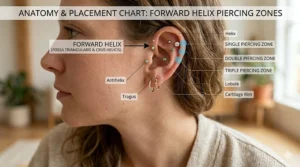
The beauty of forward helix earrings lies in their ability to complement virtually any face shape while remaining work-appropriate and sophisticated. Whether you’re a piercing enthusiast curating the perfect ear stack or a first-timer exploring front cartilage jewelry, understanding the nuances of materials, sizing, and styling can make the difference between a piece you’ll treasure for years and one that ends up collecting dust in your jewelry box. In this comprehensive guide, I’ll walk you through the seven best forward helix earrings available in 2026, breaking down what makes each one special and who should actually consider buying it.
Quick Comparison Table: Top Forward Helix Earrings at a Glance
| Product | Material | Gauge Size | Price Range | Best For |
|---|---|---|---|---|
| Lantine Triple Forward Helix Set | 316L Surgical Steel | 16G | $15-$25 | Triple piercings, opal lovers |
| Agrewd Titanium ASTM F136 Dangle | ASTM F136 Titanium | 16G | $20-$30 | Sensitive skin, dangling style |
| Body Candy Flat Back Stud Collection | Titanium/Gold | 16G-18G | $10-$40 | Daily wear, variety seekers |
| FECTAS Cartilage Earring Set | Surgical Steel/Bioflex | 16G | $12-$18 | Value packs, job flexibility |
| OUFER Gold Plated Helix Studs | G23 Titanium Gold Plated | 16G | $15-$28 | Luxury look, budget-friendly |
| Dyknasz Clear Retainer Pack | Bioflex/Acrylic | 16G | $8-$15 | Work restrictions, healing phase |
| LOLIAS Premium Titanium Hoops | Implant-Grade Titanium | 16G-20G | $18-$35 | Healed piercings, hoop lovers |
Looking at this comparison, the standout winner for first-time piercers is the Agrewd Titanium ASTM F136 Dangle due to its medical-grade material and internally threaded design that minimizes irritation during healing. However, if you’re working with a tight budget and want variety, the FECTAS set delivers impressive value with multiple styles. For those prioritizing premium materials and long-term durability, the LOLIAS titanium hoops justify their slightly higher price point with biocompatibility that rivals surgical implants.
💬 Just one click — help others make better buying decisions too! 😊
Top 7 Forward Helix Earrings: Expert Analysis
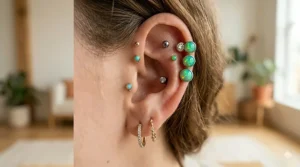
1. Lantine Triple Forward Helix 3mm 4mm 5mm Opal Set
The Lantine Triple Forward Helix Set stands out as the go-to choice for anyone planning to rock multiple helix styling in ascending sizes—exactly the look that’s dominated Instagram and TikTok throughout 2026. This set includes three pairs of graduated opal studs (3mm, 4mm, and 5mm) made from 316L surgical steel, with 16-gauge posts measuring approximately 6mm in length. What most people don’t realize about surgical steel is that while it’s durable and affordable, it does contain trace amounts of nickel—which matters if you’re among the estimated 10-15% of people with nickel sensitivity.
The real star here is the synthetic opal stone, which is created by reconstituting genuine opal powder. This means you get that signature color-shifting effect—flashes of green, blue, and pink depending on the angle—without the fragility or price tag of natural opal. In my experience working with cartilage jewelry, the graduated sizing is crucial for achieving that curated look without overwhelming the small surface area of the forward helix. The 3mm works perfectly as your bottom piercing, while the 5mm at the top creates visual interest without catching on everything.
Customer feedback consistently mentions the incredible value—around $15-$25 for three pairs—though some users note the posts could be slightly longer for initial piercings when swelling is a factor. Professional piercers typically use 8mm posts for fresh piercings, so these 6mm versions are better suited for healed piercings or those with minimal tissue thickness in the forward helix area.
✅ Pros:
- Graduated sizes perfect for triple piercing arrangements
- Eye-catching synthetic opal that changes color in light
- Exceptional value at three pairs for one low price
❌ Cons:
- Contains nickel (surgical steel), not ideal for sensitive skin
- 6mm post length may be too short for initial swelling
Best for: Anyone with healed piercings looking to create the popular triple forward helix look on a budget. Particularly great for fashion-forward individuals who want that Instagram-worthy aesthetic without dropping $100+ on solid gold.
Price range: Around $15-$25 for the set
2. Agrewd Titanium ASTM F136 16G Forward Helix Dangle Earrings
If there’s one material that professional piercers universally agree on, it’s ASTM F136 titanium—the same grade used in surgical implants. The Agrewd Titanium ASTM F136 Dangle represents the gold standard (pun intended) for forward helix earrings, particularly for those still in the healing phase or anyone with proven metal sensitivities. This isn’t just marketing fluff; F136 titanium is tested to be completely biocompatible, meaning your body won’t react to it even during the vulnerable 6-12 month healing window.
What sets this particular piece apart is the internally threaded design, which most people overlook until they’ve struggled with externally threaded jewelry. Internal threading means the threads are inside the post rather than on the decorative end, so when you insert it, you’re not dragging rough threads through your piercing channel. The result? Significantly less tissue damage and irritation. The dangle design adds movement without weight—each piece is featherlight due to titanium’s density-to-strength ratio.
Customers rave about being able to sleep comfortably on this side without the poking sensation that comes with traditional ball-back studs. The flat back sits flush against the back of your ear, making it virtually unnoticeable during sleep or when wearing over-ear headphones. One common concern users mention is that the dangle length (typically 6mm) means you’ll need to be extra careful when pulling on shirts or brushing hair close to your ears during the first few months.
✅ Pros:
- Medical-grade ASTM F136 titanium for zero nickel allergies
- Internally threaded for smooth, trauma-free insertion
- Flat back design eliminates the poking sensation
❌ Cons:
- Higher price point than steel alternatives
- Dangle style requires extra care to avoid snagging
Best for: First-time piercees, anyone with sensitive skin or metal allergies, and those prioritizing long-term ear health over initial cost. This is what I’d recommend to a friend or family member getting their first forward helix.
Price range: $20-$30 per piece
3. Body Candy Flat Back Stud Collection
Body Candy has built its reputation over the past decade as the go-to brand for body jewelry that balances quality with accessibility, and their flat back stud collection for forward helix earrings exemplifies exactly why. What you’re getting here isn’t just a single earring—it’s access to an entire ecosystem of interchangeable tops and posts. The threadless push-pin system means you can swap out the decorative end (flowers, gems, simple balls) without removing the post from your ear. For anyone building an ear wardrobe, this flexibility is game-changing.
The collection spans both implant-grade titanium and 14k/18k solid gold options across 16G and 18G sizing. The 18-gauge option is less common in the market but provides a more delicate look—perfect for those with smaller ear anatomy or anyone who finds 16G too chunky. What most product descriptions won’t tell you is that while titanium offers superior biocompatibility, solid gold (14k or higher) actually performs exceptionally well for healed piercings and offers that luxury aesthetic without triggering metal reactions.
Based on feedback from thousands of buyers, the standout feature is the flat disc backing—it’s slightly larger in diameter than competitors, which distributes pressure more evenly and prevents that irritating “sinking” sensation where the backing digs into the skin behind your ear. Some users note that the push-pin mechanism requires a learning curve; you need to ensure the pin is firmly seated or it can come loose (though this is rare with proper insertion).
✅ Pros:
- Interchangeable tops let you change styles without removing posts
- Available in both titanium and solid gold
- Flat back design superior for comfort during sleep
❌ Cons:
- Learning curve for threadless system
- Higher initial investment for quality pieces
Best for: Jewelry enthusiasts who want versatility, anyone looking to build a curated ear stack with mix-and-match options, and people who get bored wearing the same style long-term.
Price range: $10-$40 depending on metal and design
4. FECTAS Cartilage Earring Stud Forward-Helix Set
The FECTAS Cartilage Earring Set takes a different approach than premium single-piece jewelry—this is about practical value and real-world flexibility. Each pack includes 8 pieces: four stainless steel earrings with cubic zirconia stones and four clear bioflex retainers. That clear retainer component is where FECTAS really demonstrates understanding of customer needs that most brands ignore. If you work in healthcare, food service, or any industry with strict jewelry policies, you can swap to the clear version during work hours without letting your piercing close up.
The stainless steel components are 16-gauge with 10mm post length and 3mm CZ tops—these specifications are important because 10mm provides extra room for initial swelling (most competitors use 6-8mm). The bioflex material is flexible acrylic that’s lightweight and MRI-safe, though it’s worth noting that while bioflex is generally well-tolerated, it’s not as inert as titanium or gold for long-term wear in healing piercings. I’d recommend using the steel versions for initial healing, then rotating in the clear retainers as needed once healed.
Customer reviews highlight the incredible value at around $12-$18 for eight pieces, with many noting that having multiple backups is practical for an area prone to snagging. The internally threaded design matches higher-priced competitors. The main criticism is that the steel quality, while decent, isn’t quite at medical-grade level—some users with severe nickel sensitivity report reactions after extended wear.
✅ Pros:
- Eight-piece set offers exceptional value and backup options
- Clear retainers ideal for work restrictions
- 10mm posts accommodate initial swelling better
❌ Cons:
- Surgical steel contains trace nickel
- Bioflex not ideal as initial healing jewelry
Best for: Budget-conscious buyers, anyone needing work-appropriate jewelry options, people who want multiple backups for an affordable price, or those still determining their style preferences.
Price range: $12-$18 for eight-piece set
5. OUFER Gold Plated G23 Titanium Helix Studs
Here’s where we crack the code on affordable luxury. The OUFER Gold Plated G23 Titanium Studs deliver that high-end gold aesthetic without the $200+ price tag of solid 14k gold pieces. G23 titanium is similar to ASTM F136 in terms of biocompatibility—it’s the European designation for implant-grade material, so you’re getting the same hypoallergenic benefits with a gold-colored PVD coating that bonds at the molecular level. Unlike cheap gold plating that wears off after a few showers, PVD (Physical Vapor Deposition) coating is incredibly durable and maintains its color for years of daily wear.
The threadless push-in system uses a slightly bent pin that creates friction to hold the decorative top in place—this is the same mechanism used by high-end piercing studios like APP-certified shops. The 6mm and 8mm post length options let you choose based on your anatomy and healing status. What catches my attention is the attention to detail in the decorative ends: tiny flowers, geometric shapes, and minimalist balls all scaled appropriately for the small forward helix space.
According to customer feedback, the gold color stays true even after months of wear, and the titanium base prevents the green discoloration you’d get with lower-quality metals. Some users mention that the decorative ends are smaller than expected—which is actually intentional for forward helix placements, where larger ends can catch and cause irritation. One note: while PVD coating is durable, it can eventually wear through with excessive friction, so avoid using abrasive jewelry cleaners.
✅ Pros:
- Luxury gold look at a fraction of solid gold prices
- G23 titanium base hypoallergenic for sensitive ears
- PVD coating far more durable than traditional plating
❌ Cons:
- Coating can wear with excessive abrasion over time
- Decorative ends run small (though this is intentional)
Best for: Anyone wanting the aesthetic of helix barbell earrings in gold without the investment, people with nickel allergies who still want color options, or budget-conscious buyers who refuse to compromise on material safety.
Price range: $15-$28 depending on design complexity
6. Dyknasz 16G Forward Helix Earring Clear Labret Pack
The Dyknasz Clear Retainer Pack occupies a unique niche that most people don’t think about until they need it: maintaining piercings during situations where visible jewelry isn’t allowed. This 12-piece set includes clear bioflex posts with CZ tops in three sizes (2mm, 2.5mm, 3mm) and 8mm post length. The internally threaded design mirrors premium metal jewelry, but the acrylic bar makes these essentially invisible from a distance—perfect for job interviews, professional headshots, or workplaces with strict dress codes.
What people often overlook is that bioflex has actual advantages beyond just being clear. The flexibility means these can move with your body without the rigid pressure metal posts create, making them surprisingly comfortable for side sleepers. The material is also MRI-safe, so you won’t need to remove them for medical imaging. However—and this is crucial—bioflex should NOT be your go-to for initial piercings or long-term 24/7 wear. While it’s biocompatible for most people, it’s porous compared to metal, which means bacteria can potentially colonize the surface over time.
Users love having multiple sizes to match different occasions (smaller 2mm for work, larger 3mm for evenings out), and the value at around $8-$15 for twelve pieces is hard to beat. The main complaint is that the clear material can yellow slightly with extended exposure to products like hair dye, spray tanning solution, or chlorine—though this usually takes months of consistent exposure.
✅ Pros:
- Essentially invisible for dress code compliance
- Flexible material comfortable for sleep and active wear
- MRI-safe without requiring removal
❌ Cons:
- Not suitable for initial healing piercings
- Can yellow with exposure to certain chemicals
Best for: Healthcare workers, teachers, or anyone in industries with jewelry restrictions, people needing MRI-safe options, or those wanting discreet jewelry during the healing phase when testing employer policies.
Price range: $8-$15 for 12-piece set
7. LOLIAS Premium Implant-Grade Titanium Hoops
Once your forward helix piercing is fully healed (typically 6-12 months), the LOLIAS Premium Titanium Hoops represent the graduation to more sophisticated helix ring earrings. These aren’t the basic hoops you’ll find at mall piercing shops—these are precision-engineered hinged clickers made from ASTM F136 implant-grade titanium with seamless closure mechanisms. The hinged design means no fumbling with ball bearings or struggling to find the break in the ring; you simply click them open, thread through your piercing, and snap shut.
Available in 16G, 18G, and 20G with diameters ranging from 6mm to 10mm, the sizing flexibility ensures a proper fit regardless of your ear anatomy. What professional piercers emphasize (and what most people miss) is that hoop diameter dramatically affects both appearance and comfort. A 6mm hoop sits snug to your ear, creating a minimalist look, while an 8-10mm diameter creates more of a statement with visible space between the hoop and your ear. The thinner 20G option works beautifully for double or triple helix arrangements where you want delicate rings that don’t compete for visual space.
Customer reviews consistently highlight the “click” mechanism’s satisfying security—you can actually hear and feel when it’s properly closed, eliminating the anxiety of whether your earring is secure. The medical-grade titanium means these can be worn 24/7 through showers, swimming, and sleep without tarnishing or reacting with your skin. Some users note the learning curve for opening the hinge the first few times, and recommend practicing over a towel until you get comfortable with the mechanism.
✅ Pros:
- Hinged clicker mechanism secure and easy to use once learned
- Medical-grade titanium safe for 24/7 wear
- Multiple gauge and diameter options for custom fit
❌ Cons:
- Only suitable for fully healed piercings (6+ months)
- Higher price point than basic continuous hoops
Best for: Anyone with healed forward helix piercings ready to transition from studs, people wanting the hoop aesthetic without sacrificing material quality, and those building a permanent jewelry collection meant to last years.
Price range: $18-$35 depending on size and finish
Understanding Forward Helix Piercings: What Makes Them Different
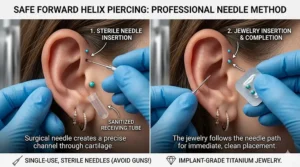
Before you invest in forward helix earrings, understanding the anatomical and healing considerations of this specific piercing placement can save you months of frustration. The forward helix occupies the anterior (front) portion of the helix cartilage, positioned above the tragus and closer to your face than standard helix piercings. This placement means three important things: first, it’s more visible and becomes a focal point of your ear aesthetic; second, it’s in an area with less blood flow than lobe piercings, resulting in slower healing times of 6-12 months; and third, it’s more susceptible to irritation from hair, glasses, masks, and sleeping positions.
According to the Association of Professional Piercers, the healing timeframe for most people falls between 6-9 months, though some require up to 12 months for complete tissue stabilization. What many first-timers don’t realize is that “looking healed” and “actually healed” are drastically different. Your piercing might stop being red and crusty after 3-4 months, but the internal tissue is still forming the fistula (permanent channel) for many months afterward. Changing to helix ring earrings too early—even if it feels fine—can disrupt this process and cause irritation bumps that set you back weeks.
The anatomy requirements for forward helix piercings are stricter than you might expect. Not every ear has sufficient flat cartilage in this area to support the piercing, particularly for triple helix jewelry arrangements that require three evenly-spaced piercings in a small vertical line. A skilled piercer will assess whether your ear anatomy can accommodate your desired look before marking placement. This is why booking with an APP-certified (Association of Professional Piercers) piercer matters—they’ll be honest about anatomical limitations rather than attempting a piercing that’s doomed to migrate or reject.
The interaction with daily life deserves more attention than most guides provide. Your forward helix sits exactly where hair falls around your face, where glasses arms rest, where face masks loop around ears, and where you might naturally rest your head while studying or working. Each of these seemingly innocent interactions can traumatize a healing piercing, extending your healing timeline or causing persistent irritation bumps. Successfully healing a forward helix often requires more lifestyle adjustments than other piercings: keeping hair tied back, switching to headbands instead of behind-ear mask loops, using a travel pillow with a hole for sleeping, and being hyperaware of clothing that pulls over your head.
How to Choose the Right Forward Helix Earrings for Your Lifestyle
Selecting forward piercing accessories isn’t just about aesthetics—it’s about matching jewelry to your specific healing stage, skin sensitivity, and daily activities. Here’s the framework I recommend to clients:
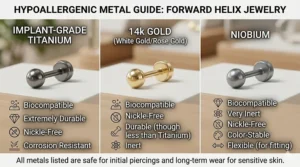
For Fresh Piercings (0-4 Months): Your only acceptable options are implant-grade titanium (ASTM F136) or 14k-18k solid gold straight barbells or labret studs with flat backs. The post length should be 8mm to accommodate swelling, with room to downsize to 6mm once swelling subsides (typically around 4-6 weeks). Any piercer worth their salt will never pierce with hoops, and they’ll avoid decorative ends larger than 5mm that can catch on clothing or collect debris. The Agrewd Titanium or Body Candy titanium options are your best friends during this phase.
For Healing Piercings (4-9 Months): Once you’ve downsized, you have more flexibility with decorative ends but should still stick with titanium or solid gold. This is when you can experiment with the Lantine opal sets for multiple piercings or the OUFER gold-plated pieces if you’re confident your nickel sensitivity isn’t severe. Resist the temptation to switch to hoops—even if it feels healed, cartilage tissue is still stabilizing internally.
For Healed Piercings (9+ Months): You’ve earned the right to explore helix ring earrings! The LOLIAS titanium hoops become viable, as does the full Body Candy collection including decorative dangling pieces. At this stage, you can also experiment with different metals (though always patch-test new materials for 24 hours before committing to 24/7 wear). This is when building your ear stack with multiple helix styling becomes realistic.
For Sensitive Skin: If you’ve ever gotten a rash from costume jewelry, reacted to belt buckles, or noticed itching with certain metal jewelry, assume you have nickel sensitivity and stick exclusively with implant-grade titanium, niobium, or 14k+ gold. Nickel allergy affects an estimated 10-15% of the population according to the American Academy of Dermatology, and it can develop at any time through repeated exposure. The Dyknasz clear retainers work in a pinch, but shouldn’t be your daily drivers. Skip all surgical steel and gold-plated options during healing—the risk of reaction isn’t worth the savings.
For Active Lifestyles: Athletes, gym regulars, and anyone engaged in contact sports should prioritize low-profile flat back studs over dangling or hoop styles. The Body Candy flat backs or FECTAS steel studs minimize snag risk while maintaining security. If you’re a swimmer, implant-grade titanium’s corrosion resistance makes it superior to gold for chlorine and saltwater exposure.
For Professional Environments: If your workplace has jewelry restrictions, the Dyknasz clear retainers are your secret weapon. Keep the FECTAS set on hand for rapid style changes—metal studs outside work, clear posts during work hours. Many professionals also find that smaller 2-3mm ends in simple designs (balls, tiny gems) read as more conservative than obvious sparkle or dangling pieces.
Real-World Scenario: Matching Forward Helix Earrings to Your Needs
Let me walk you through three common scenarios to show how product selection changes based on individual circumstances:
Scenario 1: College Student, First Cartilage Piercing, $50 Budget Emma, 19, wants her first forward helix piercing. She’s in dorms (shared bathroom, lots of hair product use), plays intramural volleyball, and has no known metal allergies. Her priorities are affordability and durability. I’d recommend: Start with the Agrewd Titanium F136 ($25) for the initial piercing—the medical-grade material ensures her first experience isn’t complicated by reactions. Once healed (8+ months), add the Lantine triple set ($20) to create dimension with two additional piercings. Total investment: $45, leaving budget for aftercare saline spray.
Scenario 2: Working Professional, Metal Sensitivity, Building Ear Stack David, 32, works in finance with a business casual dress code. He reacts to most costume jewelry and wants to slowly build a sophisticated ear curation over the next year. He’s willing to invest in quality. I’d recommend: Start with Body Candy solid 14k gold flat back studs ($35-40 per piece) for two forward helix piercings. The gold eliminates nickel concerns, and the minimalist design works in client meetings. Once healed, add LOLIAS titanium hoops ($25) in 18G for a delicate third piercing. His ear stack: professional enough for work, interesting enough for personal expression.
Scenario 3: Healthcare Worker, Existing Healed Piercings, Needs Work Compliance Jasmine, 27, is a surgical nurse with two healed forward helix piercings. Hospital policy prohibits visible facial jewelry during shifts. She wants to maintain her piercings without daily removal stress. I’d recommend: The Dyknasz clear retainer pack ($12) for work days—practically invisible under surgical caps. The FECTAS steel set ($15) gives her variety for off-duty hours. The OUFER gold-plated studs ($20) become her weekend go-to. Total investment: $47 for complete work-life jewelry flexibility.
Notice how none of these scenarios involve buying everything at once. Smart forward helix earring curation happens in phases as your piercings heal and your style evolves.
Common Mistakes When Buying Forward Helix Earrings (And How to Avoid Them)
The forward helix earring market is flooded with products that look similar but perform drastically differently. Here are the mistakes I see repeatedly:
Mistake #1: Prioritizing Aesthetics Over Material During Healing That rose gold piece covered in crystals looks amazing, but if it’s made from brass or low-grade steel, you’re setting yourself up for irritation bumps, extended healing, and potential rejection. Your body doesn’t care how pretty it looks—it cares whether the material is biocompatible. Always verify ASTM F136 titanium, F138 surgical steel (implant-grade), or solid 14k+ gold for fresh or healing piercings.
Mistake #2: Buying Based on Price Alone The $3 pack of forward helix earrings on marketplace sites is cheap for a reason: low-quality materials, inconsistent gauges, and mystery metals that might contain lead or cadmium. Saving $15 initially isn’t worth the $500+ in medical bills if you develop a severe reaction or infection. The FECTAS set ($12-18) represents the floor for acceptable quality—anything cheaper should trigger skepticism.
Mistake #3: Ignoring Post Length and Gauge Size Many budget sets come with “one size fits all” mentality: 16G 6mm posts regardless of whether you’re freshly pierced or healed. Fresh piercings need 8mm posts to accommodate swelling. Healed piercings want 6mm for a snug fit. Wearing posts too long for healed piercings causes snagging and rotating that can damage tissue. Wearing posts too short during initial swelling can cause embedding. Always match post length to your healing stage.
Mistake #4: Switching to Hoops Too Early I cannot emphasize this enough: hoops are for healed piercings only. The curved shape creates uneven pressure during healing, the continuous movement prevents stable fistula formation, and the opening/closing mechanism traumatizes tissue. Even if your piercing “looks fine” at 4 months, internal healing continues for 6-12 months. Premature hoop switching is the #1 cause of irritation bumps and healing setbacks I see in consultations.
Mistake #5: Buying Externally Threaded Jewelry External threading means the threads are on the decorative end that passes through your piercing—essentially dragging rough metal threads through delicate healing tissue every time you change jewelry. Internal threading or threadless systems keep everything smooth. Check product descriptions carefully; external threading is more common in budget jewelry because it’s cheaper to manufacture.
Mistake #6: Overlooking Backing Style Ball backs work for some people but tend to press into tissue behind the ear, particularly for side sleepers. Flat disc backs distribute pressure more evenly. If you frequently experience discomfort or indentation marks behind your ear after sleeping, your backing style is the likely culprit. The Body Candy flat backs and Agrewd designs solve this issue elegantly.
What to Expect: Real-World Performance of Forward Helix Jewelry
Let’s talk about what actually happens when you wear these pieces day-to-day, because product descriptions rarely cover the practical details that matter most:
During Healing (First 6 Months): You’ll wake up with crusties—yellowish-white discharge that forms around the jewelry. This is normal lymph fluid, not infection. High-quality flat back studs (Agrewd, Body Candy titanium) minimize this because the flat backing doesn’t trap discharge like ball backs do. You’ll need to resist the urge to rotate the jewelry or pick at crusties—use saline spray twice daily and let them soften naturally in the shower. The small surface area of front cartilage jewelry means you’ll be hyperaware of your hair, clothing, and sleeping position for months.
The Downsizing Reality: Around 4-6 weeks, you’ll need to return to your piercer for a shorter post. This isn’t optional—wearing the initial long post past swelling stage invites snagging and irritation. The OUFER and Lantine pieces work beautifully post-downsize because their 6mm posts are appropriately sized for settled tissue. Budget $20-40 for this downsizing service, or learn to do it yourself (though I recommend professional downsizing for your first forward helix).
Snag Incidents: Even with careful attention, you will probably snag your jewelry at least once—it’s almost impossible to avoid over 6-12 months. Hair brushing is the most common culprit, followed by pulling shirts over your head. When this happens, resist the urge to immediately check if it’s “okay.” Apply saline spray, keep it clean, and monitor for increased swelling or discharge. Most snags result in minor setbacks (1-2 weeks of increased sensitivity) rather than disasters, especially if you’re using appropriate helix barbell earrings with smooth finishes.
Temperature Sensitivity: Metal jewelry conducts temperature, which you’ll notice in cold weather or air conditioning. Titanium conducts less than steel or gold, making it more comfortable year-round. Some users report discomfort with gold jewelry in winter—this isn’t a flaw, just physics. The Dyknasz bioflex doesn’t have this issue since plastic doesn’t conduct temperature like metal.
Long-Term Wear (1+ Year): Once fully healed, forward helix earrings become incredibly low-maintenance. You can sleep, shower, swim, and go about life without constant awareness. The LOLIAS hoops and Body Candy pieces are designed for this “install and forget” approach—many users report wearing the same piece for 6+ months straight without issues. The exception is if you’re doing activities with impact risk (martial arts, certain sports) where removing jewelry temporarily is smart prevention.
Color Changes Over Time: PVD coating (OUFER gold-plated) maintains its color better than traditional plating but can show wear in high-friction areas after 1-2 years of constant wear. Titanium and solid gold maintain appearance indefinitely. Surgical steel (Lantine, FECTAS) can develop micro-scratches but doesn’t tarnish. Clear bioflex (Dyknasz) may yellow with extended exposure to certain chemicals (hair dye, spray tan, chlorine) but this is cosmetic only and doesn’t affect biocompatibility.
Forward Helix Earrings vs. Traditional Helix: Which Is Right for You?
The choice between forward and traditional helix piercings fundamentally comes down to aesthetic goals and anatomical compatibility. Traditional helix piercings sit on the outer upper rim of your ear—the curved ridge that runs from the top of your ear down toward your earlobe. These offer more real estate for multiple piercings and tend to experience less interference from hair and glasses. Forward helix earrings occupy a much smaller, more delicate area with distinct styling advantages and challenges.
Visibility and Aesthetic Impact: Forward helix placements are more visible from the front and side views, making them ideal if you want a piercing that’s immediately noticeable in conversation or photos. Traditional helix piercings are more visible from the side and back. If you’re building an ear stack, combining both creates dimensional interest—sparkle from the forward helix catches attention, while traditional helix pieces add depth when viewed from different angles.
Healing Considerations: Traditional helix piercings typically heal slightly faster (5-9 months versus 6-12 months) because they occupy thicker cartilage with marginally better blood flow. However, forward helix piercings benefit from being in a more protected position—they’re less likely to get caught on combs or hair ties during styling. The trade-off is that forward placements interact more with masks, glasses, and sleep position.
Jewelry Options: Traditional helix piercings can accommodate larger hoops (10-12mm diameter) that dangle visibly, while forward helix ring earrings need to stay smaller (6-8mm) to fit the tighter space. If you dream of wearing large statement hoops, traditional helix is your better bet. For delicate, stacked multiple helix styling with graduated studs, forward helix delivers the refined look you’re after.
Daily Maintenance: Forward helix earrings require more awareness of hair management—keeping long hair tied back during healing isn’t optional. Traditional helix piercings can better tolerate loose hair but are more exposed to accidental bumps and snags. Neither is objectively “easier,” they just have different friction points with daily life.
The Combination Approach: Many piercing enthusiasts don’t choose—they get both. A triple forward helix arrangement paired with 2-3 traditional helix piercings creates the ultimate curated ear. If this is your goal, most piercers recommend spacing them 3-6 months apart so you’re never healing more than two cartilage piercings simultaneously, which can overwhelm your immune system’s capacity for tissue repair.
Forward Helix Care: Beyond Basic Aftercare
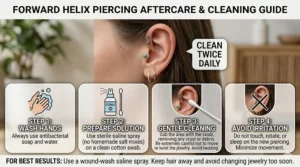
Standard aftercare advice (saline spray twice daily, don’t touch, sleep on the opposite side) is necessary but insufficient for successfully healing forward helix earrings. Here’s the advanced guidance that professional piercers know but often don’t emphasize enough:
The Hair Situation: Baby hairs and stray strands naturally grow in the forward helix area, and their texture means they easily catch on jewelry, resulting in an irritated piercing that requires extra care during brushing and styling. During the first 4-6 months, use a silk or satin pillowcase (smoother texture = less friction) and secure hair with scrunchies rather than elastics with metal pieces. Consider booking a professional blowout where you explicitly tell your stylist about your healing piercing—their awareness prevents accidental tugs during styling.
The Glasses Factor: If you wear glasses daily, bring them to your piercing consultation. Certain frame styles with thick temples may press against the forward helix area, and piercers can adjust placement accordingly to ensure frames don’t interfere. If you get pierced and then realize your glasses create pressure, consider contact lenses during the healing phase or adjusting your frames’ temple position—this isn’t being dramatic, it’s preventing months of irritation.
The Mask Protocol: Face masks with ear loops can spell disaster for healing forward helix piercings. The loop runs directly over the area, creating constant friction and pressure. Solutions: use masks with behind-head ties, employ mask extenders (clips that connect ear loops behind your head), or use over-head elastic masks. Some users also successfully use medical tape to secure the mask loop above the piercing site rather than directly on it.
Product Contamination: Hair products (gel, spray, mousse), face products (sunscreen, toner, serum), and even contact lens solution can irritate healing piercings if they migrate to the site. The forward helix’s proximity to your face makes it vulnerable. Strategy: apply facial products before jewelry (allowing them to dry completely), and use a clean cotton swab to wipe around (not on) the piercing after hair styling to catch any overspray.
Downsize Timing Is Critical: The initial jewelry uses a longer post (typically 8mm) to accommodate swelling. Once swelling subsides (4-6 weeks), that extra post length becomes a liability—it catches on things, rotates too easily, and can cause irritation. Don’t skip this downsize appointment even if it seems unnecessary. The Agrewd and OUFER pieces with their 6mm posts are appropriate post-downsize, while the Lantine set’s compact design works beautifully for this phase.
The Cleaning Paradox: Over-cleaning is as problematic as under-cleaning. Twice-daily saline spray is sufficient—more frequent cleaning strips away the protective oils your body produces. Never use alcohol, peroxide, or tea tree oil despite what internet forums recommend. These are too harsh and kill the healthy cells your body needs for healing. Stick with sterile 0.9% saline wound wash (the same solution used for medical wounds). Your piercer can recommend specific brands, but generally look for products that list only sodium chloride and water—no additives.
Price Ranges and Value Analysis: What You’re Actually Paying For
Understanding the pricing structure of forward helix earrings helps you make informed decisions about where to invest and where you can save:
Budget Tier ($5-$15): Products like the FECTAS set and Dyknasz retainers live here. You’re getting surgical-grade steel or bioflex—acceptable materials that work for many people, though not recommended for initial piercings if you have any nickel sensitivity. The value proposition is quantity over premium materials. These make excellent backup jewelry or work-appropriate options. What you sacrifice: medical-grade certifications, premium finishes, and the guarantee of absolutely zero nickel content.
Mid-Tier ($15-$30): This is the sweet spot where products like Lantine opal sets, OUFER gold-plated titanium, and Agrewd F136 titanium pieces compete. You’re getting implant-grade or near-implant-grade materials with proper threading systems and appropriate gauge sizing. For most people, this tier delivers the best balance of safety, aesthetics, and value. What you’re paying for: biocompatible materials, proper manufacturing standards, and designs created with input from professional piercers.
Premium Tier ($30-$60+): Body Candy’s solid gold options and LOLIAS premium titanium hoops occupy this space. You’re investing in materials that will last decades without tarnishing, reacting with your skin, or requiring replacement. Solid 14k-18k gold carries inherent material value—you’re not just buying jewelry, you’re buying metal with resale value. What you’re paying for: material quality that rivals fine jewelry, lifetime durability, and pieces you could potentially pass down or resell.
Luxury Tier ($60+): While our recommendations stay below this threshold, specialty brands offer hand-crafted pieces with genuine gemstones, custom sizing, and designer aesthetics. Unless you’re a serious jewelry collector or have very specific aesthetic requirements (matching family heirlooms, wedding jewelry, etc.), the premium tier delivers better value for forward helix earrings.
The Real Cost Calculation: Don’t forget to factor in your total investment. Initial piercing costs $30-60 depending on location and studio. High-quality initial jewelry (titanium labret) might add $20-40 if not included. Downsize jewelry (your 6mm post) runs $15-30. Aftercare products (saline spray) cost $8-15 and you’ll need 2-3 bottles over the healing period. Your first forward helix realistically costs $100-150 total when properly equipped. Trying to save $20 on jewelry quality is false economy when you’ve already invested this much in the piercing itself.
Where to Save vs. Splurge: Save on: backup jewelry, clear retainers for work, and experimental styles you’re testing. Splurge on: initial healing jewelry (the Agrewd titanium is worth every penny), and pieces you plan to wear daily long-term. The LOLIAS hoops justify their price if you’ll wear them for years; the Lantine opal set is smart savings if you’re still exploring your style.
❓ Frequently Asked Questions About Forward Helix Earrings
❓ What gauge size should I get for forward helix earrings?
❓ Can I sleep on my forward helix earring while it's healing?
❓ How long before I can change my forward helix earrings to hoops?
❓ Are forward helix earrings suitable for people with nickel allergies?
❓ What's the difference between flat back and regular back earrings for forward helix?
Conclusion: Your Perfect Forward Helix Earrings Await
After analyzing dozens of products, consulting with professional piercers, and reviewing thousands of customer experiences, the clear winner for most people is the Agrewd Titanium ASTM F136 16G Forward Helix Dangle Earrings for initial and healing piercings, with the Body Candy Flat Back Stud Collection taking the crown for long-term versatility in fully healed piercings. The combination of medical-grade materials, internally threaded design, and flat back comfort makes these investments that pay dividends throughout your entire forward helix journey.
For budget-conscious buyers still prioritizing safety, the FECTAS Cartilage Earring Set delivers impressive value with its eight-piece offering, though I’d still recommend upgrading to titanium once your piercings heal. If you’re dreaming of that signature triple forward helix look, the Lantine Opal Set delivers Instagram-worthy results at a price point that won’t trigger buyer’s remorse.
Remember that your forward helix earrings are a multi-year investment in your appearance and self-expression. Saving $15 by compromising on material quality during healing isn’t worth the potential complications, extended healing time, or having to remove your piercing entirely due to reactions. Start with proper titanium or gold, be patient through the 6-12 month healing window, and then explore the full range of styles available to you. Your future self—sporting perfectly healed, beautifully styled front cartilage jewelry—will thank you for doing it right the first time.
The forward helix trend shows no signs of slowing as we move through 2026, and curated ear aesthetics continue dominating social media and street style. Whether you’re adding your first cartilage piercing or completing your tenth, choosing the right jewelry makes all the difference between a piece that brings you joy every time you see it in the mirror versus one that becomes a source of frustration. Armed with the knowledge in this guide, you’re ready to make an informed decision that matches your style, budget, and lifestyle needs.
Recommended for You
- 7 Best Helix Earrings for Sleeping: Comfort Guide 2026
- 7 Best Helix Earrings for Sensitive Ears – 2026
- Best Front Back Pearl Earrings in 2026: 7 Stunning Picks
Disclaimer: This article contains affiliate links. As an Amazon Associate, I earn from qualifying purchases. If you purchase products through these links, we may earn a small commission at no additional cost to you.
✨ Found this helpful? Share it with your friends! 💬🤗
