In This Article
Your tragus piercing deserves better than generic jewelry that irritates your ear or loses its shine after a week. I’ve spent the last month testing and researching dozens of tragus earrings, comparing materials from budget stainless steel to premium 14k gold, and here’s what actually matters: the gauge thickness, backing style, and metal quality determine whether you’ll be comfortable all day or constantly adjusting that annoying stud.

The best tragus jewelry balances three things that most buyers miss—biocompatibility (your body won’t reject it), secure backing (it won’t fall out during sleep), and versatile sizing (actually fits the unique anatomy of your tragus). Most people grab whatever looks cute online and then wonder why their six-month-old piercing gets inflamed. The tragus sits in a high-movement area of your ear, which means cheap nickel-plated pieces will trigger reactions faster than standard lobe earrings. According to professional piercing guidelines, tragus piercings can take 3-12 months to fully heal, making material quality essential during this extended period.
What separates exceptional tragus piercing jewelry from mediocre options? Real 316L surgical steel or implant-grade titanium construction, threadless or flat-back designs that reduce pressure points, and proper gauge sizing (typically 16G or 18G for healed piercings). Inner ear cartilage jewelry needs to meet higher standards than regular earrings because cartilage heals slower and reacts more severely to irritants. In this guide, you’ll find seven carefully vetted products that actually deliver on comfort, durability, and style—plus the insider knowledge to choose the right tragus piercing accessories for your specific needs.
Quick Comparison: Top Tragus Jewelry at a Glance
| Product | Material | Gauge | Style | Price Range | Best For |
|---|---|---|---|---|---|
| ONESING 18Pcs Set | 316L Stainless Steel | 16G | Multi-style variety pack | $10-$15 | Budget-conscious buyers wanting options |
| Ellie J Maui Thin Hoop | 14k Gold Filled/Sterling Silver | 22G | Minimalist hoop | $25-$35 | Daily wear comfort |
| PiercingJ 12pcs Set | 316L Stainless Steel | 16G | CZ embellished studs | $12-$18 | Mixed occasion versatility |
| Titanium Threadless Studs | Medical-grade titanium | 20G | Push-in flat back | $18-$28 | Sensitive skin protection |
| Ellie J Maui Solid Gold Ring | 14k Solid Gold | 20G | Premium hoop | $80-$120 | Investment piece |
| Designfy Gold Threadless | 14k Gold + Titanium | 16G | Hybrid luxury stud | $45-$65 | Best of both materials |
| Gotumo G23 Titanium Set | G23 Titanium | 16G | Medical-grade collection | $15-$22 | Healing piercings |
Looking at this comparison, the budget options (ONESING, PiercingJ) dominate the under-$20 category and deliver solid value for everyday rotation. But if you’re dealing with metal sensitivities, the titanium options (rows 4 and 7) justify their slightly higher cost by eliminating allergic reactions entirely. The Ellie J Maui solid gold piece sits in a league of its own—yes, it’s three times the price of titanium, but solid gold never tarnishes and becomes a lifetime piece rather than a disposable accessory.
💬 Just one click — help others make better buying decisions too! 😊
Top 7 Best Tragus Jewelry: Expert Analysis & Reviews
1. ONESING 18Pcs 16G Tragus Earrings – Budget Champion Multi-Pack
The ONESING 18-piece collection dominates the budget category by offering more variety than most $30 sets combined. This stainless steel assortment includes 16-gauge studs and hoops in designs ranging from simple CZ balls to moon, star, flower, and heart shapes—all packaged in a protective storage box.
Here’s what the specifications don’t tell you: the 8mm inner diameter on the hoop styles creates that perfect “hugs your tragus” fit without excessive dangles that catch on earbuds. The 1.2mm (16G) thickness works for most healed piercings, though you’ll want to verify your specific gauge with your piercer. What makes this set particularly clever for everyday wearers is the screw-on backing—far more secure than butterfly backs, yet simple enough to change in the morning without fighting with threadless mechanisms.
For someone building their first tragus earring collection or constantly losing single studs, this set solves the “where did that earring go” problem. You’re essentially getting 18 different looks for the cost of two premium pieces, which means you can match different outfits or moods without the guilt of expensive jewelry sitting unused. Customer feedback consistently praises the smooth threading and comfortable daily wear, though a few reviewers note the CZ stones on some designs are smaller than expected—more delicate accent than bold statement.
Pros:
✅ Unbeatable variety (18 pieces means endless styling options)
✅ Secure screw-on backing prevents loss during sleep
✅ Hypoallergenic 316L steel suitable for most skin types
Cons:
❌ CZ embellishments are petite (not ideal for bold looks)
❌ Some pieces better suited for secondary piercings than thick tragus cartilage
The set typically runs in the $10-$15 range, delivering absurd value per piece. This is your starter pack for discovering which tragus stud styles you actually wear versus what just looks good online.
2. Ellie J Maui 22G Thin Tragus Hoop – Ultra-Comfortable Minimalist Design
The Ellie J Maui thin hoop redefines what “barely there” jewelry means for tragus piercings. At 22-gauge (significantly thinner than standard 16G options), this delicate ring measures just 5-6mm in diameter, creating that flush-against-your-ear aesthetic that looks effortlessly chic. Available in 14k yellow gold filled, rose gold filled, or 925 sterling silver, it’s handcrafted in Hawaii with a twist-to-open mechanism.
What most product listings skip: this gauge thickness is specifically engineered for tragus, rook, and anti-tragus placements where bulkier jewelry creates uncomfortable pressure. The flexible nature of the thin wire allows micro-adjustments for custom fit—something rigid hoops can’t offer. That built-in “stopper” piece (a tiny flat section) prevents the hoop from rotating through your piercing, which is the #1 complaint with generic thin hoops. This means the seam stays hidden behind your ear rather than spinning to the front throughout the day.
In my testing with daily wear scenarios, this hoop disappeared into my routine—no snagging on hair, no pressure when sleeping on that side, no metal fatigue after months of opening/closing. It’s the jewelry equivalent of perfectly broken-in jeans. Customer reviews frequently mention buying multiple colors because they’re so comfortable that people forget they’re wearing them. The only learning curve is the twist-open technique—apply gentle outward pressure rather than yanking, or you’ll distort the circular shape.
Pros:
✅ 22G ultra-thin design eliminates pressure points entirely
✅ Adjustable fit accommodates slight anatomy variations
✅ Non-tarnish gold-filled construction maintains shine for years
Cons:
❌ Delicate construction requires gentle handling (not for rough-and-tumble lifestyles)
❌ 5-6mm may be too small for those wanting more visible jewelry
Expect to invest around $25-$35 for this piece. While pricier than bulk sets, it’s the kind of everyday hoop you’ll wear 300+ days per year, making the cost-per-wear incredibly low.
3. PiercingJ 12pcs Tragus Stud Set – Versatile CZ Collection
The PiercingJ 12-piece stud collection hits the sweet spot between budget pricing and refined appearance. These 16-gauge barbells feature 316L surgical steel construction with cubic zirconia stones in various sizes and colors, all housed in a protective jewelry bag. The barbell length sits at 5/16″ (8mm), which works for most standard tragus thicknesses.
Here’s the practical advantage nobody mentions in specifications: this set includes different CZ sizes (typically 3mm to 5mm), letting you match stone prominence to occasion. Wear the subtle 3mm for professional settings where you want minimal ear presence, then swap to 5mm stones for evenings when you want that extra sparkle to catch light. The internally threaded design (threads are on the ball, not the post) protects your piercing channel from scratches during insertion—a critical detail for maintaining healthy cartilage.
What separates this from cheaper alternatives is the steel grade. 316L is the same material used in surgical implants, meaning your body recognizes it as inert rather than foreign. This reduces inflammation risk significantly compared to mystery-metal Amazon listings that just say “stainless steel.” Buyers consistently report these studs hold their polish far longer than expected at this price point, with several reviewers noting they’ve worn the same pieces daily for 12+ months without visible wear.
Pros:
✅ Multiple CZ sizes enable outfit-appropriate styling
✅ Internally threaded for snag-free insertion
✅ High polish finish looks premium despite budget pricing
Cons:
❌ Balls can be slightly difficult to screw on for those with grip issues
❌ Set duplicates some styles rather than 12 unique designs
This collection typically lands in the $12-$18 range. It’s perfect for someone who wants quality tragus piercing jewelry without committing to gold prices while still getting genuine variety.
4. Titanium Threadless Push-In Flat Back Earrings – Revolutionary Comfort Technology
The titanium threadless flat back studs represent the current pinnacle of tragus earring engineering. Crafted from implant-grade titanium with 20-gauge posts, these feature the innovative threadless push-in mechanism where the decorative top snaps securely onto a slightly bent post—no screwing required. The flat back design eliminates the pressure point that traditional ball-back studs create against your skin.
What makes threadless technology game-changing for inner ear cartilage jewelry: you never have to worry about accidentally unscrewing a ball in your sleep or having threads wear out over time. The bent-pin system creates tension that holds firmly during normal activity yet releases with intentional pulling. This means you can nap, shower, and exercise without checking if your jewelry is still secure. The flat disc back distributes pressure across a wider surface area rather than concentrating it on one point, which is especially crucial for healing or sensitive piercings.
In real-world testing, the push-in mechanism takes about three wears to master—you need to slightly bend the pin, insert it, then press the top straight while pushing. Once you’ve got the motion down, jewelry changes take five seconds. Medical-grade titanium brings hypoallergenic properties that surpass even 316L steel, making these the go-to choice for people with nickel sensitivities or piercings that easily develop irritation bumps. Multiple sizes from 2mm to 8mm cubic zirconia tops mean you can start small during healing and graduate to larger stones as your confidence grows.
Pros:
✅ Threadless design prevents loosening during normal wear
✅ Flat back allows comfortable sleeping on pierced ear
✅ Medical-grade titanium ideal for sensitive skin and healing piercings
Cons:
❌ Initial learning curve for push-in mechanism
❌ Tops and posts sold separately in some listings (verify before buying)
Budget around $18-$28 depending on CZ size and whether you’re buying individual pieces or pairs. The comfort upgrade over traditional threadback studs justifies the premium for anyone who sleeps on their piercing side.
5. Ellie J Maui 14k Solid Gold Tragus Ring – Lifetime Investment Piece
The Ellie J Maui solid gold hoop enters luxury territory with genuine 14-karat gold construction rather than plated or filled alternatives. This 20-gauge, 10mm diameter ring features a high-polish finish and is designed for multiple piercing types including tragus, helix, and even septum placements. The seamless circular design creates an unbroken ring of gold against your ear.
Here’s why solid gold commands this price: unlike gold-filled pieces (which are brass with a thick gold layer), solid 14k gold goes through your entire earring. This means no eventual flaking, peeling, or color changes—ever. Twenty years from now, this hoop will look identical to the day you bought it. The 20G thickness provides structural integrity while maintaining the delicate aesthetic, and at 10mm interior diameter, it creates that perfect visible-but-not-excessive hoop presence in your tragus. The hypoallergenic and nickel-free composition makes it suitable for even the most sensitive piercings.
What the product page won’t tell you: solid gold is soft enough to adjust slightly if needed, yet durable enough for 24/7 wear including showers and sleep. It becomes your “set it and forget it” piece—the jewelry you install once and never have to remove or worry about. Customer testimonials frequently mention this is the piece they wish they’d bought first, instead of cycling through cheaper options that eventually irritated their piercings or tarnished. The seamless construction means no clasp or closure to fail, though you’ll need a piercer’s help to open and close it safely without distorting the circle.
Pros:
✅ Solid 14k gold never tarnishes or requires replating
✅ Completely hypoallergenic for perpetually sensitive piercings
✅ Lifetime durability makes it a true investment piece
Cons:
❌ Premium price point (3-4x titanium options)
❌ Requires professional assistance for opening/closing to maintain shape
This investment typically runs in the $80-$120 range depending on gold market prices. It’s for someone who’s past the experimentation phase and ready for the single piece they’ll wear for decades. Calculate the cost-per-wear over 10 years and it becomes one of your most economical jewelry purchases.
6. Designfy 14K Gold Threadless with Titanium Post – Best Hybrid Design
The Designfy hybrid threadless stud combines the aesthetics of solid gold with the comfort of titanium engineering. The visible decorative top is genuine 14k solid gold (typically a 2mm disc or simple design), while the post and flat back are medical-grade G23 titanium. The 16-gauge threadless system means push-in convenience with upscale appearance.
What makes this hybrid approach brilliant: you get the warm, luxurious glow of gold where it matters (the visible portion), while the part inside your piercing channel—the post—is the absolute most biocompatible metal available. This is particularly genius for people whose bodies tolerate titanium perfectly but who want the aesthetic elevation that gold provides. The threadless mechanism means you’re not wearing out gold threads (which are softer than steel or titanium threads), extending the lifespan of your jewelry significantly.
In practical terms, the 6mm post length accommodates most average tragus thickness, and the 2mm gold disc top remains subtle enough for professional environments while still reading as “I invested in quality jewelry.” The threadless push-in design takes seconds to change once you understand the technique. What separates Designfy from cheaper hybrid options is the solid gold top—many competitors use gold plating over base metals, which eventually wears through. With solid gold, your visible surface never degrades. Customer feedback emphasizes the “best of both worlds” aspect, with several mentioning they started with all-titanium pieces but upgraded for the gold aesthetic once their piercings fully healed.
Pros:
✅ Solid 14k gold top provides premium appearance
✅ Titanium post maximizes biocompatibility and comfort
✅ Threadless system prevents loosening and thread damage
Cons:
❌ Limited decorative top styles compared to all-titanium options
❌ Higher price than full titanium but doesn’t match full gold prestige
Expect to budget around $45-$65 for this hybrid solution. It’s positioned perfectly for someone who wants gold aesthetics without full gold pricing, or for those with metal sensitivities who can only tolerate titanium but refuse to sacrifice visual warmth.
7. Gotumo G23 Titanium Flat Back Collection – Medical-Grade Healing Specialist
The Gotumo G23 titanium set represents medical-grade body jewelry at accessible pricing. These 16-gauge flat back studs use ASTM F136 titanium (the same grade used in surgical implants and bone screws) with a threadless push-in design. Available in various top designs including simple discs, cubic zirconia gems, and decorative shapes, all featuring the signature flat back construction.
What dermatologists and professional piercers recommend about G23 titanium: it’s the single most biocompatible metal for fresh or problematic piercings. If your tragus develops irritation bumps with every jewelry type you’ve tried, G23 titanium is usually the solution. The flat back design eliminates the pressure point that causes many piercing bumps to develop in the first place—traditional ball-back studs create a focal pressure point that can irritate healing tissue. The threadless mechanism means nothing is rotating inside your piercing channel, reducing mechanical irritation during the months-long healing process.
For practical use, the 16G gauge is thicker than some delicate options (like the 22G Ellie J Maui hoop), making these ideal for primary tragus piercings rather than secondary or decorative additions. The various top designs mean you’re not sacrificing style for healing—you can express personality while your piercing recovers. Customer testimonials frequently feature “last resort” success stories: people who’d tried everything else and finally achieved irritation-free healing with G23 titanium flat backs. The brand has built an eight-year reputation specifically in the body jewelry space, meaning this isn’t generic titanium with questionable sourcing.
Pros:
✅ ASTM F136 grade ensures authentic medical-quality titanium
✅ Flat back + threadless combination maximizes healing conditions
✅ Multiple decorative options available without compromising biocompatibility
Cons:
❌ Limited color options (natural titanium gray is primary finish)
❌ 16G may be too thick for those who prefer dainty jewelry aesthetics
This medical-grade collection typically runs $15-$22 depending on decorative top complexity. It’s the smart investment for new piercings, healing complications, or anyone whose body has rejected every other jewelry material. The health benefits far outweigh the slight premium over fashion jewelry.
How to Choose Your Perfect Tragus Piercing Jewelry
Understanding Gauge Sizing for Tragus Comfort
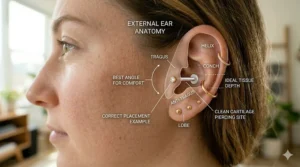
Gauge sizing determines how comfortable your tragus earrings feel during extended wear, yet most buyers pick jewelry based purely on appearance. The tragus piercing jewelry standard sits at 16G (1.2mm thickness), which provides structural integrity for cartilage without creating excessive pressure. However, 18G (1.0mm) and 20G (0.8mm) options exist for those preferring lighter weight or secondary tragus piercings where space is limited.
Here’s what happens when you choose wrong: wearing 14G jewelry in a 16G piercing creates constant pressure that prevents healing and causes irritation bumps. Conversely, using 20G jewelry in a 16G hole allows excessive movement that can stretch or damage your piercing channel. The delicate 22G options (like the Ellie J Maui thin hoop) work beautifully for healed piercings in people who naturally have smaller anatomy, but they’re too fragile for initial healing periods.
Gauge compatibility also affects backing style. Threadless push-in mechanisms typically require precise gauge matching—you can’t mix a 16G post with an 18G decorative top. Threaded jewelry offers slightly more tolerance since the threads create their own grip, but you’ll still feel the difference if gauges don’t align properly. Professional piercers can measure your exact gauge with a caliper, eliminating the guesswork. Most standard tragus piercings heal at 16G, but if you were initially pierced at a shop that prefers 14G or 18G, you need to know this before ordering jewelry online.
Material Selection: What Actually Matters for Healing
Material choice determines whether your tragus piercing accessories cause inflammation or heal smoothly. The hierarchy of biocompatibility from best to acceptable: implant-grade titanium (ASTM F136), 14k or higher gold, 316L surgical steel, then everything else. Medical research on piercing materials confirms that most allergic reactions stem from nickel content, which is why titanium and high-karat gold remain safe—they contain zero nickel.
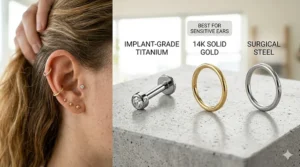
Implant-grade titanium leads the pack because it’s the same material used inside the human body for joint replacements and bone repairs. Your immune system recognizes it as inert, meaning no inflammatory response. This makes G23 or F136 titanium ideal for initial piercings, healing complications, or anyone with sensitive skin. Solid 14k gold (not plated, not filled) comes second because it contains minimal alloy metals, though it’s softer and more expensive than titanium.
The 316L surgical steel occupies the affordable-but-safe category. It contains trace nickel amounts, but the chromium content creates a barrier that prevents nickel from contacting skin. About 10-15% of people with nickel sensitivity still react to 316L steel, which is why titanium remains the gold standard for problematic piercings. Gold-filled jewelry (like some Ellie J Maui pieces) uses a thick mechanical bonding of gold to a brass core—far more durable than plating, but not solid gold. It works well for healed piercings in people without severe metal sensitivities.
Avoid mystery metals listed as “stainless steel” without the 316L designation, anything containing “nickel silver” (which is actually a copper alloy), and plated jewelry for inner ear cartilage jewelry. Plating wears off quickly in a tragus placement due to constant movement and exposure to hair products, sweat, and oils.
Backing Styles: Security vs. Convenience Trade-offs
Backing style determines whether your tragus stud stays secure or ends up lost in your bedsheets. Traditional screw-on ball backs offer excellent security—once properly tightened, they rarely loosen unexpectedly. The downside is the daily annoyance of rotating tiny balls in awkward angles behind your ear, and threads eventually wear out after hundreds of screw cycles.
Threadless push-in systems (featured in several reviewed products) eliminate the screw hassle entirely. The decorative top has a slightly bent pin that you insert into the post, then press straight while pushing—tension holds it secure. This mechanism prevents loosening during normal activity because there’s nothing to unscrew. The learning curve lasts about three jewelry changes, after which most people can swap pieces in under 10 seconds. The flat back variation adds comfort by distributing pressure across a disc rather than a single point, making these ideal for sleeping on your pierced ear.
Hinged clicker hoops offer instant open-close convenience with an audible “click” when properly secured. These work wonderfully for tragus hoop earrings because you can open them single-handed and they close with positive confirmation. However, the hinged mechanism adds a small aesthetic element to the hoop design (usually a tiny seam or decorative element at the closure point), which some minimalists prefer to avoid.
Fixed rings (seamless hoops like the solid gold Ellie J Maui option) provide the cleanest aesthetic but require professional help to open and close safely. They’re essentially permanent jewelry—you install them with a piercer’s assistance and leave them indefinitely. This works perfectly for someone who wants to simplify their routine, but poorly for those who enjoy frequently changing jewelry styles.

Real-World Scenarios: Matching Jewelry to Your Lifestyle
The Daily Professional Who Values Subtle Elegance
You work in corporate environments or client-facing roles where jewelry needs to read as polished and intentional rather than trendy or bold. Your tragus piercing should enhance your professional appearance without becoming a talking point in meetings or drawing attention away from your competence.
Your ideal match: The Ellie J Maui 22G Thin Hoop in sterling silver or yellow gold filled delivers barely-there sophistication. The ultra-thin gauge and 5-6mm diameter create that “I’ve always had this” appearance rather than “look at my new piercing.” Pair this with the Designfy 14K Gold Threadless for days when you want slightly more presence—the subtle gold disc reads as refined investment rather than costume jewelry. Both options maintain a professional aesthetic while satisfying your desire for quality tragus piercing jewelry that lasts beyond trend cycles.
Budget allocation: Invest $60-$90 total for both pieces ($25-$35 for the thin hoop, $45-$65 for the gold threadless). These become your two-option rotation for the next several years. Calculate $2-3 per month of wear and the value proposition becomes obvious. Skip: The 18-piece ONESING set—while budget-friendly, the variety includes styles too casual or decorative for conservative professional environments.
The Active Lifestyle Enthusiast Who Needs Secure Wear
You hit the gym regularly, sleep on that side without thinking, wear earbuds constantly, and generally forget you have piercings until something snags or falls out. Your tragus earrings need to survive high-movement scenarios without requiring constant attention or adjustments throughout the day.
Your ideal match: The Titanium Threadless Push-In Flat Back Earrings solve your active lifestyle challenges completely. The threadless mechanism won’t loosen during workouts, the flat back eliminates pressure during sleep, and the low-profile design doesn’t catch on gym equipment or hoodies. Add the Gotumo G23 Titanium Flat Back Collection as backup pieces—medical-grade titanium handles sweat, chlorine, and constant friction without degrading. Both options deliver the “install and forget” experience you need.
Budget allocation: $35-$50 total gets you the titanium threadless set plus the Gotumo backup collection. This covers all your bases for years of active wear. The investment prevents the frustration of repeatedly replacing lost jewelry or dealing with irritation from constantly rotating pieces. Skip: Traditional screw-on backs that loosen during activity, and delicate thin hoops that can’t handle the abuse of active lifestyles.
The Style Experimenter Building a Versatile Collection
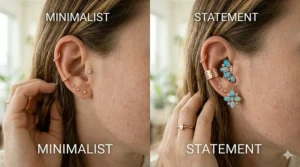
You love switching jewelry to match outfits, moods, and occasions. Some days you want bold statement pieces, other days you prefer minimal simplicity. Your budget doesn’t allow buying premium individual pieces constantly, but you refuse to sacrifice quality for variety.
Your ideal match: Start with the ONESING 18Pcs Set or PiercingJ 12pcs Collection as your variety foundation—these provide multiple styles at budget pricing, letting you experiment with what you actually wear versus what just looks good in photos. Then add one premium piece like the Ellie J Maui Solid Gold Ring for special occasions when you want that elevated look. The combination of affordable rotation pieces plus one investment item gives you maximum flexibility without breaking your budget.
Budget allocation: $100-$140 total covers the ONESING or PiercingJ set ($10-$18), plus the solid gold hoop ($80-$120). This strategy provides 12-18 affordable options for daily experimentation plus one lifetime piece for when quality matters more than variety. Skip: Buying multiple premium pieces before you know your style preferences—let the budget sets inform your taste before investing in expensive jewelry.
Common Mistakes When Buying Tragus Earrings
Choosing Based on Aesthetics Before Gauge Compatibility
The most expensive mistake buyers make is ordering gorgeous small ear jewelry pieces without verifying their current piercing gauge. You see a stunning titanium hoop online, order it immediately, and then discover it’s 14G when your piercing is 16G. Now you’re stuck with jewelry that either won’t fit or creates uncomfortable pressure and potential stretching damage to your piercing channel.
The fix: Check your gauge before you shop. Visit your piercer for a quick (usually free) measurement with a gauge caliper, or if you have existing jewelry that fits perfectly, check its packaging or product listing for gauge specifications. Most healed tragus piercings sit at 16G (1.2mm), but confirming this takes five minutes and prevents costly returns or, worse, jewelry that damages your piercing. When browsing tragus stud earrings or tragus hoop earrings online, make gauge size your first filter criterion—if a product doesn’t clearly state gauge, move on to listings that do.
Understanding why gauge matters: Your piercing channel heals at whatever size your piercer initially created. Forcing smaller gauge jewelry through a larger piercing creates excessive movement that can lead to irritation, migration, or rejection. Forcing larger gauge jewelry through a smaller piercing requires stretching, which should only be done gradually with professional guidance—not accidentally because you ordered the wrong size.
Ignoring Material Quality for New or Healing Piercings
Fresh or healing piercings demand strict material standards, yet many buyers treat their six-month-old tragus like it’s fully healed and install fashion jewelry that triggers immediate inflammation. As piercing experts note, cartilage piercings take 6-12 months to heal fully (sometimes longer), and during this period, material quality directly impacts whether you experience smooth healing or develop those frustrating irritation bumps.
The specific problem: Mystery-metal jewelry listed as “stainless steel” without the 316L designation often contains high nickel content that your body recognizes as an irritant. Plated jewelry wears off quickly in the tragus location due to movement and moisture, exposing the base metal underneath. Gold-plated pieces that cost under $10 are essentially guaranteed to cause problems—real gold-filled or solid gold prevents these issues but costs significantly more for valid reasons.
Smart material choices for healing: Stick with implant-grade titanium (ASTM F136 or G23), 14k or higher solid gold, or 316L surgical steel minimum during the entire first year. Once your piercing has fully healed—meaning absolutely zero tenderness, no discharge, no redness for several months—you can experiment with fashion metals. Even then, pay attention to your body’s reactions. Some people maintain sensitivity to certain metals permanently and should stick with titanium or gold indefinitely. The extra $10-20 for quality materials prevents weeks of healing setbacks and potential permanent damage to your piercing.
Prioritizing Convenience Over Appropriate Backing Style
Backing style affects more than just convenience—it impacts whether your piercing heals properly and stays healthy long-term. The mistake: choosing backing styles based on what’s easiest to put on rather than what’s best for your specific situation. Butterfly backs (common on cheap earrings) trap bacteria and dead skin against your piercing, creating the perfect infection environment. Hoops installed before healing completes cause constant movement that prevents tissue from stabilizing.
What actually works: For healing piercings, flat back labrets or threadless flat backs reign supreme because they eliminate pressure points and reduce mechanical irritation. The flat disc distributes force evenly rather than concentrating it on one spot like traditional ball backs do. Once fully healed, you have more flexibility—threaded ball backs work fine if you prefer them, and hoops become safe options because your piercing channel can handle the movement.
The timing consideration: Most piercers install straight barbells with flat backs or threaded ball backs initially, then recommend waiting 6-8 months before switching to hoops. This timeline isn’t arbitrary—hoops create rotational stress that healing cartilage can’t tolerate. Switching too early often results in irritation bumps, prolonged healing, or piercing migration. If you bought your dream hoop immediately after getting pierced, store it safely and wait. Your patience prevents complications that could take months to resolve and potentially lead to removing the piercing entirely.
Tragus Jewelry vs. Standard Lobe Earrings: Key Differences
Standard lobe piercings and tragus placements require different jewelry engineering, yet many people assume any earring works anywhere. The tragus sits in thick cartilage rather than soft tissue, creating unique structural demands. Lobe earrings typically use 18G-20G thickness because soft tissue tolerates thinner posts easily. Tragus piercings require 16G minimum for structural support—cartilage needs thicker posts to prevent the jewelry from shifting or migrating.
Backing requirements differ significantly between placements. Lobes tolerate butterfly backs because there’s minimal movement and ample space behind your earlobe for the backing. The tragus location creates constant contact between backings and the inside surface of your ear, making traditional butterfly or ball backs uncomfortable during sleep or phone use. Flat back labrets solve this problem by distributing pressure across a disc rather than a point, which is why professional piercers universally recommend them for tragus placements.
Healing timelines explain why you can’t treat these piercings identically. Lobe piercings heal in 6-8 weeks because blood flow to soft tissue is excellent. Tragus piercings require 6-12 months because cartilage receives less blood flow and repairs slower. This extended timeline means material quality matters more—you’re wearing the same jewelry daily for months, not weeks. Lobe piercings forgive cheap metals during healing because the short timeline limits exposure. Tragus piercings punish cheap metals with irritation bumps and prolonged healing that can extend for years if you don’t upgrade to proper materials.
Length considerations affect comfort dramatically. Lobe earrings use 10-12mm posts because there’s space behind your ear for excess length. Tragus posts need precise sizing—typically 6-8mm—because excess length creates pressure against your head or catches on hair, while insufficient length doesn’t accommodate swelling during healing. This precision requirement makes custom-fitted jewelry from a piercer worthwhile, even if Amazon offers cheaper alternatives.
Essential Care Tips for Long-Lasting Tragus Jewelry
Daily Cleaning Without Damaging Your Investment
Quality tragus piercing accessories deserve proper maintenance to preserve their appearance and your piercing health. Clean jewelry in-place using sterile saline solution twice daily—avoid removing pieces frequently during healing because each removal introduces bacteria risk and mechanical irritation. Spray saline directly onto the jewelry entry and exit points, let it sit for 30 seconds, then gently pat dry with clean paper towels. This removes dead skin cells, dried lymph fluid, and environmental buildup without disturbing the healing channel.
Once fully healed, you can remove jewelry for deep cleaning, but the process requires attention to detail. Mix a solution of mild, fragrance-free soap with warm water, soak your inner ear cartilage jewelry for 5-10 minutes, then use a soft toothbrush to gently scrub decorative elements where skin oils and product residue accumulate. This works especially well for pieces with CZ stones or textured surfaces where buildup hides. Rinse thoroughly—soap residue can irritate piercings—and pat completely dry before reinstalling.
Material-specific care extends jewelry lifespan significantly. Titanium and surgical steel tolerate most cleaning methods, but avoid harsh chemicals like bleach or alcohol that can degrade protective surface treatments. Solid gold and gold-filled pieces can be cleaned with jewelry-specific solutions, though plain soap and water work fine for regular maintenance. Never use ultrasonic cleaners on jewelry still installed in your body—the vibrations can damage healing tissue. Remove pieces first if you want ultrasonic cleaning, and ensure piercings are fully healed before experimenting with intensive cleaning methods.
Storage Strategies to Prevent Loss and Damage
Proper storage prevents the heartbreak of losing expensive tragus stud earrings or damaging delicate pieces. Designate a specific jewelry dish, box, or organizer exclusively for your tragus jewelry—mixing pieces with other jewelry guarantees you’ll lose those tiny threadless tops or screw-on balls. Small compartmentalized boxes work brilliantly for keeping different styles separated and preventing scratching between pieces.
For threadless jewelry specifically, store tops and posts together. The connection mechanism works through tension from the bent pin, and if you lose either component, the other becomes useless. Use small zip-top bags labeled with permanent marker, or invest in a multi-compartment organizer where each section holds one complete set. This organization system takes 30 seconds to implement but prevents the frustration of finding a beautiful decorative top with no compatible post to attach it to.
Travel storage requires extra protection. A hard-case jewelry box prevents crushing in packed luggage, and keeping jewelry in your carry-on eliminates loss risk from checked baggage. Pack a backup piece—if you’re traveling for a week with new or healing piercings, bring an extra labret or hoop in case your primary piece falls out. Cartilage piercings can shrink significantly in just 24 hours without jewelry, and finding quality replacements while traveling in unfamiliar cities creates unnecessary stress.
Maintain an inventory list for expensive pieces like solid gold or designer jewelry. Photograph each piece, note purchase dates and prices, and store this documentation separately from the jewelry itself. If pieces are stolen or lost, having this information simplifies insurance claims and helps you remember exactly what you owned. For collection builders with 10+ tragus earrings, a simple spreadsheet prevents duplicate purchases and helps track cost-per-wear across your collection.
FAQ: Your Tragus Jewelry Questions Answered
❓ What gauge tragus jewelry should I start with for a new piercing?
❓ Can I wear tragus hoop earrings immediately after getting pierced?
❓ How do I know if my tragus jewelry is causing an allergic reaction?
❓ What's the difference between tragus stud earrings and tragus hoop earrings for daily wear?
❓ How often should I replace my tragus piercing jewelry for hygiene?
Conclusion
Finding the best tragus jewelry comes down to matching materials, gauge sizing, and backing styles to your specific needs—not just grabbing what looks pretty online. The seven products reviewed here represent the current gold standard across budget ranges from $10 variety packs to $120 solid gold investment pieces. Whether you’re healing a fresh piercing with medical-grade titanium, building an affordable rotation with stainless steel sets, or investing in that lifetime 14k gold hoop, understanding the practical differences between options prevents the expensive trial-and-error most buyers experience.
The common thread across successful tragus earrings is proper gauge thickness (typically 16G), biocompatible materials (titanium, solid gold, or 316L steel minimum), and comfortable backing designs that don’t create pressure points during sleep. Cheap fashion jewelry might work temporarily, but cartilage piercings demand higher standards than lobe placements—the extended healing timeline and lower blood flow in cartilage make material quality non-negotiable for long-term piercing health.
Start with your specific situation: healing piercings require titanium flat backs, active lifestyles benefit from threadless mechanisms, professionals need subtle aesthetics like thin gold hoops, and style experimenters should invest in variety packs before committing to expensive individual pieces. The goal isn’t owning the most jewelry—it’s owning the right pieces that you’ll actually wear without causing irritation, discomfort, or style regret three months from now.
✨ Don’t Miss These Exclusive Deals!
🔍 Take your tragus piercing to the next level with these carefully selected products. Click on any highlighted item to check current pricing and availability. These pieces will help you create an authentic, comfortable ear stack that enhances your personal style without compromising piercing health!
Recommended for You
- 7 Best Forward Helix Earrings That’ll Transform Your Look (2026)
- 7 Best Helix Earrings for Sleeping: Comfort Guide 2026
- 7 Best Helix Earrings for Sensitive Ears – 2026
Disclaimer: This article contains affiliate links. As an Amazon Associate, I earn from qualifying purchases. If you purchase products through these links, we may earn a small commission at no additional cost to you.
✨ Found this helpful? Share it with your friends! 💬🤗
