In This Article
If you’ve ever experienced itchy, red, or inflamed earlobes after wearing earrings, you’re not alone. Nickel allergy is one of the most common causes of allergic contact dermatitis, particularly affecting earlobes from earring contact. The good news? Threader earrings for sensitive ears offer an elegant solution that combines style with skin-friendly materials.
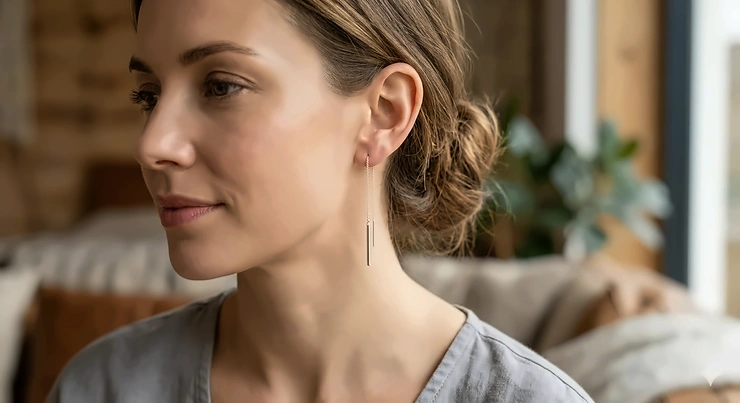
I’ve spent years navigating the world of hypoallergenic jewelry, and threader earrings have become my go-to recommendation for anyone dealing with metal sensitivities. These lightweight, graceful pieces thread through your piercing like silk, creating a modern, minimalist look without the heaviness or irritation of traditional earrings. Unlike conventional studs or hooks that put constant pressure on one spot, threader earrings distribute weight evenly and allow your skin to breathe.
What makes threader earrings particularly brilliant for sensitive ears is their versatility—you control exactly how they sit, how long they hang, and how much metal actually touches your skin. Whether you’re searching for hypoallergenic threading earrings for daily wear or double sided threader earrings for a special occasion, the right pair can transform your jewelry experience from painful to pleasurable. In this comprehensive guide, I’ll walk you through the seven best options currently available, share expert tips on how to wear threader earrings, and reveal everything you need to know about nickel-free chain jewelry that won’t betray your sensitive skin.
Quick Comparison Table
| Product | Material | Price Range | Best For | Rating |
|---|---|---|---|---|
| VU100 14K Gold Plated Threader | Stainless Steel, Gold Plated | $15-$20 | Everyday elegance | ⭐⭐⭐⭐ 4.3/5 |
| Cora Rogers Minimal Threader | Titanium Steel | $18-$25 | Ultra-sensitive skin | ⭐⭐⭐⭐⭐ 4.7/5 |
| Humble Chic Bar Threader | 14K Gold Plated | $22-$28 | Professional settings | ⭐⭐⭐⭐ 4.5/5 |
| S925 Butterfly Tassel | Sterling Silver | $16-$22 | Statement pieces | ⭐⭐⭐⭐ 4.4/5 |
| Kakikaki Spiral Threader | 925 Sterling Silver | $24-$30 | Trendy minimalists | ⭐⭐⭐⭐⭐ 4.8/5 |
| YFN Rose Gold Chain | Sterling Silver | $14-$19 | Budget-friendly | ⭐⭐⭐⭐ 4.2/5 |
| Aocelly Double Piercing Set | 925 Sterling Silver | $26-$32 | Multiple piercings | ⭐⭐⭐⭐⭐ 4.6/5 |
💬 Just one click – help others make better buying decisions too! 😊
Top 7 Threader Earrings for Sensitive Ears: Expert Analysis
1. VU100 14K Gold Plated Threader Earrings
The VU100 Threader Earrings have earned their reputation as a reliable choice for everyday wear. These elegant pieces feature a stainless steel base with 14K gold plating, offering that luxurious golden shimmer without the hefty price tag or nickel exposure.
Key Specifications:
- Material: Hypoallergenic stainless steel with 14K gold plating
- Length: Approximately 2 inches of threading chain
- Weight: Ultra-lightweight at 2.6g per pair
Customer feedback consistently praises these for their comfort during all-day wear. One reviewer mentioned wearing them for 12-hour shifts without any irritation—impressive for anyone who’s dealt with sensitive ears.
✅ Pros:
- Nickel-free and lead-free construction
- Flexible chain creates beautiful movement
- Affordable luxury look
❌ Cons:
- Gold plating may wear over time with daily use
- Chain can occasionally tangle with long hair
Price Range: $15-$20
2. Cora Rogers Minimal Threader Earrings
For those with ultra-sensitive skin, the Cora Rogers Minimal Threader Earrings represent the gold standard. Crafted from hypoallergenic titanium steel, these pieces are engineered specifically for people who react to almost everything else.
Key Specifications:
- Material: Medical-grade titanium steel
- Dimensions: 1.93 x 0.67 inches
- Gauge: 18G/1mm ultra-thin wire
The smooth, thin post glides through piercings effortlessly, and customers report zero reactions even after wearing them continuously for weeks. This is the pair you reach for when your ears are already irritated and need something gentle.
✅ Pros:
- Medical-grade hypoallergenic materials
- Incredibly lightweight and comfortable
- Minimalist design suits any outfit
❌ Cons:
- Limited color options
- Higher price point than basic options
Price Range: $18-$25
3. Humble Chic 14K Gold Plated Bar Threader
The Humble Chic Bar Threader earrings bring sophistication to the hypoallergenic jewelry world. These feature an elongated bar design that creates a sleek, modern silhouette perfect for professional environments or upscale casual wear.
Key Specifications:
- Material: 14K gold plated over base metal
- Design: Long bar with threader backing
- Finish: Available in brushed or high-shine
These earrings strike that sweet spot between statement piece and everyday wearable. The brand’s commitment to quality control means consistent nickel-free construction, though you should still verify each purchase meets your sensitivity needs.
✅ Pros:
- Elegant, professional appearance
- Suitable for both work and weekend
- 90-day product assurance policy
❌ Cons:
- Bar design may not suit all face shapes
- Requires careful handling to prevent bending
Price Range: $22-$28
4. S925 Butterfly Tassel Threader Earrings
When you want your threader earrings for sensitive ears to make a statement, the S925 Butterfly Tassel design delivers. These genuine sterling silver pieces combine whimsy with hypoallergenic practicality.
Key Specifications:
- Material: Genuine 925 sterling silver with rhodium finishing
- Length: 100mm (3.93 inches) total
- Details: Features delicate butterfly charm and pearl accent
Customers love these for special occasions—weddings, date nights, celebrations where you want something extra without compromising skin health. The longer chain creates graceful movement that catches light beautifully.
✅ Pros:
- Authentic sterling silver construction
- Eye-catching butterfly and pearl details
- Comes with gift-ready packaging
❌ Cons:
- Longer length may not suit shorter hairstyles
- Delicate design requires gentle handling
Price Range: $16-$22
5. Kakikaki Spiral Threader Earrings
The Kakikaki Spiral Threader earrings have developed a cult following among jewelry enthusiasts who appreciate artisanal quality. Each pair is handcrafted from solid 925 sterling silver, with a unique twisted spiral design.
Key Specifications:
- Material: Solid 925 sterling silver with rhodium plating
- Drop length: 1.6 inches
- Design: Handmade spiral twist
What sets these apart is the clever threading mechanism—they twist into your ear, creating a secure fit without backs or clasps. Reviewers consistently mention the “feel incredibly secure” factor, which is rare for threader styles.
✅ Pros:
- Handcrafted artisan quality
- Secure twist-lock design
- High-polish smooth finish
❌ Cons:
- Learning curve for insertion technique
- Premium price reflects handmade craftsmanship
Price Range: $24-$30
6. YFN Rose Gold Threader Earrings
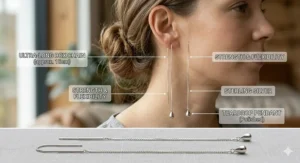
Budget-conscious shoppers with sensitive ears will appreciate the YFN Rose Gold Threader Earrings. These sterling silver pieces offer beautiful rose gold plating at an accessible price point.
Key Specifications:
- Material: 925 sterling silver with rose gold finish
- Chain length: 2 inches (5cm)
- Chain type: 0.8mm Rolo chain
The brand’s 365-day satisfaction guarantee demonstrates confidence in their hypoallergenic construction. These work beautifully for anyone building their jewelry collection without breaking the bank.
✅ Pros:
- Exceptional value for sterling silver
- 365-day return policy
- Trendy rose gold finish
❌ Cons:
- Rose gold coating may fade with frequent wear
- Chain is delicate and requires careful storage
Price Range: $14-$19
7. Aocelly Chain Earrings Sterling Silver Threader Set
The Aocelly Double Piercing Set is perfect for those rocking multiple ear piercings. This set includes two pairs—one short (2.4 inches) and one long (4.8 inches)—giving you versatile styling options.
Key Specifications:
- Material: S925 sterling silver with rhodium plating
- Set includes: Two different length pairs
- Sustainability: Made from recycled materials
This set lets you create asymmetrical looks or coordinate multiple piercings with matching hypoallergenic pieces. The brand’s commitment to sustainable materials adds ethical appeal to practical function.
✅ Pros:
- Two pairs in one purchase
- Multiple styling possibilities
- Eco-friendly recycled materials
❌ Cons:
- May be more than needed for single piercing wearers
- Higher initial investment
Price Range: $26-$32
Understanding Sensitive Ears and Metal Allergies
Sensitive ears aren’t just an inconvenience—they’re your body’s alarm system warning you about potential allergens. Research published in Contact Dermatitis shows that piercing poses a significant risk factor for nickel allergy, with studies finding that individuals with ear piercings have nearly 6 times higher odds of developing nickel sensitivity compared to those without piercings.
The science behind ear sensitivity is fascinating. When your skin comes into contact with certain metals, particularly nickel, your immune system can mistakenly identify these metals as threats. This triggers an allergic reaction that manifests as redness, itching, swelling, or even blistering around the piercing site. According to the Mayo Clinic, nickel allergy symptoms typically appear within hours to days after contact and can persist for weeks, causing significant discomfort.
What makes this particularly tricky is that you can’t always tell if jewelry contains nickel just by looking at it. Even expensive pieces can harbor this allergen mixed into their metal composition. The challenge is compounded by the fact that approximately 24.7% of European earrings intended for piercing exceed regulatory limits for nickel release, suggesting quality control remains inconsistent across the jewelry industry.
Your earlobe skin is thinner and more delicate than skin elsewhere on your body, making it especially vulnerable to irritation. When you add the trauma of piercing—which creates a wound that takes weeks to fully heal—you create the perfect conditions for sensitization to occur. Research from the Journal of Pediatrics emphasizes that parents should be warned about the association between ear piercing and nickel allergy, particularly when considering the ideal age and materials for earrings.
The good news? Once you understand your triggers, you can avoid them completely. Threader earrings for sensitive ears made from verified hypoallergenic materials provide a solution that doesn’t require you to sacrifice style for comfort.
Why Threader Earrings Are Perfect for Sensitive Skin
Threader earrings offer several unique advantages that make them particularly suited for sensitive ears. Unlike traditional post earrings that maintain constant, focused pressure on one spot, threader earrings distribute their weight across a larger area as the chain moves through your piercing. This reduced pressure point means less friction, less irritation, and happier earlobes.
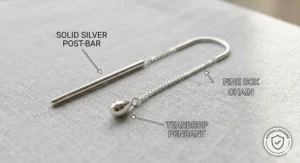
The design itself is inherently gentle. A typical threader consists of a thin chain or wire that you literally thread through your piercing hole, with a decorative element on one or both ends. Because you control how much chain passes through, you can adjust the fit to minimize metal contact with your skin. Some people thread them all the way through and let them dangle freely; others prefer to leave most of the chain in front for a different aesthetic.
This adjustability matters enormously for sensitive skin. If your ears are having a particularly reactive day, you can position the earring so less metal touches your skin. If you’re feeling fine, you can wear them traditionally. This flexibility simply doesn’t exist with fixed-post earrings, where you’re committed to whatever length and pressure the manufacturer designed.
The lightweight nature of threader earrings also reduces irritation. Heavy earrings pull on your piercing, stretching the hole and creating micro-tears in the delicate tissue. These tiny injuries can become entry points for allergens or bacteria, compounding sensitivity issues. Threader earrings typically weigh just a few grams—sometimes less than a single gram per earring—eliminating the pulling sensation that causes long-term damage.
Additionally, the continuous chain design means there are no backs, clutches, or butterfly clasps to lose or fumble with. These components often contain higher concentrations of nickel because they’re considered “less visible” parts. By eliminating them entirely, threader earrings reduce your overall allergen exposure. You’re also removing potential breeding grounds for bacteria that can accumulate in the tiny crevices of traditional earring backs.
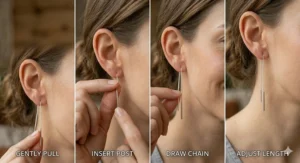
How to Wear Threader Earrings: A Step-by-Step Guide
Learning how to wear threader earrings might feel awkward at first, but once you get the technique down, you’ll find them easier than traditional earrings. Here’s your complete guide to mastering this elegant style.
Step 1: Prepare Your Earrings and Ears
Start with clean hands and clean earrings. Wash your threader earrings with mild soap and water, then dry thoroughly. Make sure your earlobes are also clean and dry. If you’re prone to sensitivity, you might apply a thin layer of hypoallergenic barrier cream around (not in) your piercing hole about 30 minutes before wearing earrings.
Step 2: Identify the Threading End
Most threader earrings have a thin, tapered end designed to slide through your piercing easily. This end is usually plain wire or chain without decorative elements. Hold the earring by the decorative portion, letting the threading end hang straight down.
Step 3: Thread From Front to Back
Here’s where people often get confused—the standard method is threading from front to back. Position the tapered end at the front of your earlobe, align it with your piercing hole, and gently guide it through. Use a mirror for your first few attempts. Don’t force it; if you feel resistance, withdraw and try again at a slightly different angle.
Step 4: Adjust the Length
Once the threading end emerges from the back of your ear, pull gently until the earring sits how you want it. For everyday threader earrings, many people prefer equal length front and back. For asymmetrical threader earrings, you might pull more through to create different lengths on each side of your ear.
Step 5: Secure if Needed
Some threader earrings come with small rubber stoppers that slide onto the chain behind your ear to prevent the earring from sliding through. If yours didn’t include them, you can purchase them separately. Alternatively, some people create a small bend in the wire behind their ear to keep the earring in place.
Step 6: Check Your Comfort
Move your head normally—turn side to side, look up and down. The earring should move with you without tugging or pulling. If you feel any pinching or unusual pressure, remove the earring and rethread it.
Pro Tips for Threader Success:
- Practice with one earring at home before wearing both out
- For double sided threader earrings, consider which orientation works best for your ear anatomy
- Store them laid flat to prevent tangling
- If the chain kinks, gently straighten it with your fingers before wearing
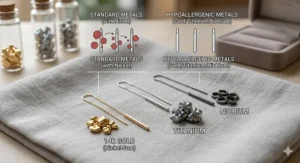
Best Materials for Hypoallergenic Threading Earrings
Choosing the right material makes the difference between comfortable all-day wear and irritation within hours. Not all “hypoallergenic” claims are created equal, so understanding which materials truly work for sensitive skin is crucial.
925 Sterling Silver
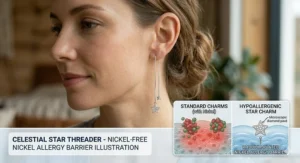
Sterling silver (marked as .925 or 925) is one of the most reliable choices for nickel-free chain jewelry. Pure silver is too soft for jewelry, so it’s alloyed with other metals—typically copper—to create the 92.5% silver composition that gives sterling its name. Quality sterling silver should not contain nickel, though always verify with the manufacturer since some lower-quality pieces may include trace amounts.
The rhodium plating you’ll see on many sterling silver threader earrings serves multiple purposes: it prevents tarnishing, adds extra shine, and creates an additional barrier between your skin and the silver. This plating is hypoallergenic itself and helps extend the life of your earrings.
Surgical-Grade Stainless Steel
Surgical stainless steel contains nickel that is typically bound so tightly it’s unlikely to be released, making it a viable option for many people with nickel sensitivity. However, reactions vary individually—some people with severe nickel allergies still react to surgical steel, while others tolerate it perfectly.
The advantage of surgical-grade stainless steel is its incredible durability. These earrings resist corrosion, maintain their finish through daily wear, and can withstand exposure to water and sweat without degrading. For threader earrings everyday wear, this resilience is invaluable.
Titanium
Medical-grade titanium represents the pinnacle of hypoallergenic materials. It’s completely nickel-free, incredibly lightweight, and biocompatible—meaning your body treats it as neutral rather than foreign. Dermatologists frequently recommend titanium for patients with severe metal sensitivities. Titanium threader earrings cost more than other options, but for people with extreme sensitivities, they’re worth every penny.
The main drawback of titanium is limited color options. Pure titanium is grayish-silver, and while anodizing can create colors, the process is more complex than simple plating. If you prioritize absolute safety over aesthetic variety, titanium is your best bet.
14K, 18K, and 24K Gold
Real gold—14K or higher—is naturally hypoallergenic. The higher the karat, the purer the gold and the less likely you’ll react. According to WebMD’s guidance on nickel allergies, yellow gold 14K, 18K, or 24K is recommended for sensitive skin, though white gold may contain nickel and should be avoided.
Gold-plated jewelry is trickier. If the base metal contains nickel and the plating wears through, you’ll be exposed to the allergen. For gold-plated hypoallergenic threading earrings, ensure the base metal is sterling silver or surgical steel, not an unspecified “base metal” that could contain nickel.
Materials to Avoid
Steer clear of jewelry described simply as “metal,” “alloy,” or “fashion jewelry” without specific material disclosure. These often contain high levels of nickel. Similarly, avoid “German silver” (which isn’t silver at all) and “nickel silver” (which obviously contains nickel despite the silver in the name).
Everyday Wear vs Special Occasion Styles
The beauty of threader earrings for sensitive ears lies in their versatility across different wear contexts. Understanding which styles suit which situations helps you build a practical, wearable collection.
For Everyday Office Wear
Professional settings call for subtle elegance—think simple bar threaders or minimal chain designs in sterling silver or gold. The Humble Chic Bar Threader exemplifies this category perfectly: sophisticated enough for client meetings, understated enough for daily video calls. Keep lengths moderate (1-2 inches) to avoid distracting movement, and stick with classic finishes like high-polish silver or 14K gold.
For Weekend Casual
Your weekend wardrobe allows more playfulness. This is when double sided threader earrings shine—you can experiment with asymmetrical lengths, mix metals, or try bolder designs like the Butterfly Tassel Threader. The relaxed context means you can go longer, dangly-er, and more eye-catching without worrying about professional appropriateness.
For Active Lifestyles
If you’re hitting the gym, running errands, or chasing kids, you need threader earrings everyday wear that won’t snag, pull, or get tangled. Shorter spiral designs like the Kakikaki Spiral Threader work brilliantly here—the twist-lock mechanism keeps them secure during movement, and the compact length prevents catching on clothing or hair.
For Special Events
Weddings, galas, and celebrations deserve statement pieces. This is your moment for longer chains, decorative elements, and dramatic asymmetrical threader earrings. The extended length of designs like the S925 Butterfly Tassel creates graceful movement perfect for formal wear. Just ensure you’ve tested the earrings beforehand—discovering a sensitivity issue mid-event is no fun.
Seasonal Considerations
Summer’s heat and humidity increase sweat production, which can accelerate nickel release from lesser-quality metals. Stick with your most trusted hypoallergenic pieces during hot months. Winter’s dry air can make skin more reactive, so you might need to be extra gentle with your ears and choose your softest, most comfortable designs.
Double Sided and Asymmetrical Threader Designs
Double sided threader earrings and asymmetrical threader earrings represent the cutting edge of this jewelry category, offering unique styling possibilities that traditional earrings simply can’t match.
Understanding Double Sided Designs
Double sided threader earrings feature decorative elements on both ends of the threading chain. You pull the chain through your piercing until both decorative pieces are visible—one in front of your ear, one behind. This creates a stunning layered effect that catches light from multiple angles.
The Aocelly Double Piercing Set takes this concept further by providing two complete pairs at different lengths. You can wear the shorter pair in your first piercing and the longer pair in your second, creating a coordinated cascade effect. Or mix and match based on your mood—one set of double-sided earrings can create dozens of different looks depending on how you thread and position them.
The Asymmetry Advantage
Asymmetrical threader earrings challenge the traditional “matching pair” paradigm. You might wear different lengths in each ear, or thread the same earring at different depths to create intentional imbalance. This modern, editorial approach to styling has become increasingly popular, particularly among younger jewelry enthusiasts.
The beauty of asymmetry with threader earrings is its adjustability. Unlike fixed asymmetrical designs where you’re committed to the manufacturer’s vision, threader earrings let you customize the asymmetry. Thread one deeper for a longer back, pull the other through more for a longer front—you control the exact aesthetic.
Styling Tips for Complex Designs
When working with double sided or asymmetrical styles, remember that less is often more elsewhere. If your earrings are the statement, keep necklaces minimal or skip them entirely. These designs already create visual interest and movement; you don’t need to compete with yourself.
Consider your hair style too. Updos and pulled-back styles show off double sided threader earrings beautifully, revealing both decorative elements. Loose hair creates a peek-a-boo effect with asymmetrical designs—sometimes visible, sometimes hidden—which can be equally appealing.
Care and Maintenance Tips
Proper care extends the life of your threader earrings for sensitive ears and maintains their hypoallergenic properties. Neglected jewelry can develop buildup that irritates even non-sensitive skin.
Daily Cleaning Routine
After each wear, wipe your threader earrings with a soft, lint-free cloth. This removes oils, makeup, and environmental debris before they can accumulate. For sterling silver pieces, this simple habit prevents tarnish from taking hold.
Weekly Deep Clean
Once weekly, clean your hypoallergenic threading earrings more thoroughly. Mix a few drops of mild, fragrance-free dish soap with warm water. Soak the earrings for 5-10 minutes, then use a soft-bristled toothbrush to gently clean the chain links and decorative elements. Rinse under running water and dry completely with a clean cloth.
Never use harsh chemicals, alcohol-based cleaners, or abrasive materials on your earrings. These can strip protective coatings like rhodium plating or damage the metal surface, potentially exposing you to allergens you were previously protected from.
Storage Solutions
Store each pair of threader earrings separately to prevent tangling. Small zip-lock bags work perfectly, or invest in a jewelry box with individual compartments. For nickel-free chain jewelry, avoid storing in humid environments like bathrooms where moisture can accelerate tarnishing.
Keep your earrings away from perfumes, hair sprays, and lotions. Apply these products first, let them dry completely, then put on your earrings. The chemicals in beauty products can react with metals, causing discoloration or coating degradation.
When to Replace
Even the best hypoallergenic earrings have a lifespan. Replace threader earrings when you notice:
- Visible wear in the threading wire (thinning, rough spots, or breaks)
- Discoloration that won’t clean away
- Loss of rhodium plating on silver pieces
- Any skin reaction you didn’t experience initially
Don’t try to “push through” with earrings that are showing wear. Damaged jewelry is more likely to release allergens and cause irritation.
Common Mistakes to Avoid
Even with the best threader earrings for sensitive ears, poor habits can cause problems. Here are the mistakes I see most often—and how to avoid them.
Mistake #1: Wearing Earrings Too Long Initially
When you first get new hypoallergenic threading earrings, resist the urge to wear them all day immediately. Start with 2-3 hours, then remove them and check your ears. If all’s well, gradually increase wear time over several days. This helps you identify potential issues before they become full-blown reactions.
Mistake #2: Ignoring Early Warning Signs
That slight itch? That barely-there redness? Don’t dismiss it. Allergic reactions to nickel typically begin within hours to a few days after contact, and early intervention prevents more severe symptoms. At the first sign of irritation, remove your earrings and give your ears a break.
Mistake #3: Over-Tightening Adjustable Designs
With threader earrings everyday wear, some people pull the chain too tight, creating unnecessary pressure. The earring should move freely through your piercing without binding. If you need security, use rubber stoppers rather than creating tension.
Mistake #4: Sharing Earrings
Never share earrings, even with close family. Everyone’s skin chemistry is different, and what works for someone else might cause a reaction in you. Additionally, sharing earrings transfers bacteria, oils, and potential irritants between people.
Mistake #5: Sleeping in Your Earrings
Remove your earrings before bed. Sleeping in threader earrings can cause tangling, pulling, and prolonged pressure on your piercing. Your ears need break time to recover from daytime wear, especially if you have sensitive skin.
Mistake #6: Assuming All “Hypoallergenic” Claims Are Equal
Not all hypoallergenic labeling is regulated or reliable. According to dermatological research, there’s no standard in the United States that defines “nickel-free,” and companies may use the term loosely. Always verify the specific materials used, preferably choosing jewelry marked with concrete compositions like “925 sterling silver” or “surgical-grade stainless steel” rather than vague “hypoallergenic metal” descriptions.
Mistake #7: Neglecting the Piercing Itself
Even perfect earrings can’t compensate for poorly maintained piercings. Clean your piercing holes regularly with saline solution, especially if you’ve had reactions in the past. Healthy, well-maintained piercings are less reactive to potential irritants.

FAQ: Your Questions Answered
❓ How do you put in threader earrings if you have never worn them before?
❓ Can threader earrings help prevent nickel allergy from getting worse?
❓ How long should threader earrings be for everyday wear?
❓ Do double sided threader earrings stay in place during activity?
❓ Are asymmetrical threader earrings appropriate for professional environments?
Conclusion: Finding Your Perfect Match
Navigating the world of threader earrings for sensitive ears doesn’t have to be a painful trial-and-error process. Armed with knowledge about hypoallergenic materials, proper threading techniques, and the distinct advantages of different designs, you’re now equipped to make informed choices that prioritize both style and skin health.
The seven earring options I’ve detailed represent the cream of the crop currently available—each offering verified hypoallergenic construction combined with thoughtful design. Whether you’re drawn to the budget-friendly elegance of the YFN Rose Gold Threader Earrings, the artisanal quality of the Kakikaki Spiral Threader, or the versatile Aocelly Double Piercing Set, you’ll find an option that meets your specific needs.
Remember that even with the best nickel-free chain jewelry, your individual chemistry plays a role. What works perfectly for your best friend might not work for you, and that’s okay. Start slowly, pay attention to your body’s signals, and don’t hesitate to remove earrings at the first sign of irritation. Your ear health is worth more than any accessory.
As you build your collection of hypoallergenic threading earrings, you’ll discover the joy of wearing beautiful jewelry without the anxiety of reactions. Those gentle ear threading designs you once thought were just a trendy aesthetic? They’re actually engineered comfort for sensitive skin. The lightweight chains, adjustable lengths, and breathable designs all work together to create an earring experience that’s as kind to your ears as it is attractive to the eye.
You deserve jewelry that celebrates you rather than causing discomfort. With the right threader earrings for sensitive ears, that’s exactly what you’ll get.
✨ Don’t Miss These Exclusive Deals!
🔍 Take your jewelry collection to the next level with these carefully selected threader earrings. Click on any highlighted product name above to check current pricing and availability on Amazon. These hypoallergenic pieces will help you create authentic style your sensitive ears will love!
Recommended for You
- 7 Best Gold Threader Earrings That Transform Your Look in 2026
- 7 Best Threader Earrings for Women 2026
- 7 Best Animal Stud Earrings for 2026
Disclaimer: This article contains affiliate links. If you purchase products through these links, we may earn a small commission at no additional cost to you.
✨ Found this helpful? Share it with your friends! 💬🤗
